Beyond Mining: Where Does the Energy Used by a Cryptocurrency Transaction Actually Go?
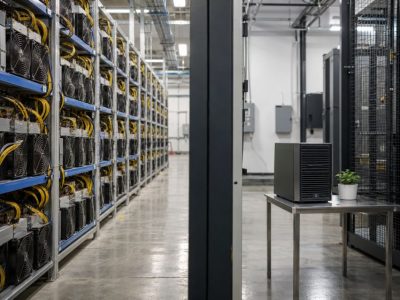 Cryptocurrency networks do not all use electricity in the same way. The biggest difference comes from how a blockchain reaches agreement on which transactions are valid. Bitcoin relies on energy-intensive proof-of-work, while Ethereum and many newer networks use proof-of-stake systems that require far less computing power.
This distinction matters because the electricity associated with a transaction is rarely consumed by that transaction alone. Energy supports a wider network of miners or validators, computers running nodes, data storage, networking equipment and other infrastructure. The Cambridge Centre for Alternative Finance therefore estimates Bitcoin’s electricity demand from network-wide mining activity rather than treating individual payments as isolated energy events.
Why Bitcoin Uses Energy Even When Few Transactions Occur
Bitcoin miners compete to add blocks by performing vast numbers of cryptographic calculations. Specialized machines continue this work whether a block contains relatively few transactions or is packed with them.
The Cambridge Centre for Alternative Finance explains that Bitcoin’s power demand depends heavily on network hash rate, mining hardware efficiency and electricity costs. This means much of Bitcoin’s electricity use is tied to securing the blockchain through proof-of-work rather than directly processing each payment.
Bitcoin nodes play a different role. They receive blocks, check transactions against network rules and maintain blockchain data. These computers consume electricity too, although mining is the far larger energy component of Bitcoin’s security model.
What Changed When Ethereum Stopped Mining?
Ethereum provides a useful comparison because it switched from proof-of-work to proof-of-stake in September 2022. Instead of miners competing through computation, validators lock cryptocurrency as collateral and participate in proposing and confirming blocks.
Data published by the Ethereum Foundation says the transition cut Ethereum’s electricity consumption by roughly 99.95 percent. Its current energy estimates, based on research from the Crypto Carbon Ratings Institute, put network consumption at about 0.0026 TWh per year.
Validators and ordinary nodes still need servers, storage and internet connections. Proof-of-stake simply removes the continuous computational competition that makes proof-of-work so electricity intensive.
Where Do Batching and Layer-2 Networks Change the Equation?
Blockchains can also reduce the resources associated with each user action by grouping many transactions together. Ethereum’s Layer-2 rollups process transactions away from the main chain, compress them and submit batches back to Ethereum.
Ethereum.org explains that a batch can represent thousands of individual Layer-2 transactions. Zero-knowledge rollups can also move computation and state storage off the main network while publishing cryptographic proofs and essential data for verification.
Newer architectures take other approaches. Networks such as Solana use proof-of-stake-based validation and are designed for high transaction throughput. The Solana Foundation notes that network security does not depend on miners continuously spending electricity on computational competition.
Why “Energy Per Transaction” Can Give the Wrong Impression
Dividing a blockchain’s annual electricity consumption by its transaction count looks simple, but the result can hide how the system actually works. Bitcoin miners secure the entire network continuously. Adding one more transaction does not automatically cause a proportional increase in mining electricity.
The same problem appears when comparing a base blockchain with networks that batch thousands of operations through Layer-2 systems. Transaction counts may describe very different workloads.
A more useful comparison considers the consensus mechanism, total network energy demand, transaction capacity, data requirements and scaling architecture together. As blockchain designs continue to evolve, understanding where electricity is actually used gives a clearer picture than relying on a single energy-per-transaction figure.